Full Moon Nights in Crete: The 2026 Calendar
Every full moon date left in 2026, the August night when Greece opens 126 ancient sites for free after dark, and the two things a full moon quietly ruins — one of which is us.
There is one night a year when Greece opens its ancient sites for nothing, keeps them open after dark, and puts on concerts among the ruins. It is the August full moon, and if you are reading this in the last week of August you have very likely missed nothing yet.
Here are the dates that matter for the rest of the year, what the full moon is genuinely good for in Crete, and — because somebody should say it — the two things it actively ruins.
The dates
From the Royal Observatory Greenwich, the remaining 2026 full moons:
| Date | Name |
|---|---|
| 28 August | Sturgeon Moon |
| 26 September | Corn or Harvest Moon |
| 26 October | Hunter's Moon |
| 24 November | Beaver Moon |
| 24 December | Cold Moon |
Those times are published for London, and Crete runs two hours ahead, so treat the date rather than the minute as the thing to plan around. In practice the moon looks essentially full for the night either side as well, which gives you a three-night window rather than a single evening.
The August full moon is a genuine event
This is the part most visitors never hear about. Every August, on and around the full moon, Greece's Ministry of Culture opens archaeological sites and museums across the country free of charge and keeps them open into the night, with music and performances at many of them.
For 2026 the programme covers 126 sites, centred on 28 August with events running from the 26th to the 30th, and it is the twenty-seventh year it has been held. Sites typically open from around 7:30 or 8pm and run until 11pm or midnight. In Crete, the Malia archaeological site is on the list, with a concert billed for around half past eight.
The exact list and the participating sites change every year, so check the Ministry of Culture's own announcement rather than trusting a date you read in August of a different year. But the shape of it is reliable: late summer, free entry, ruins after dark.
Standing in a Minoan palace by moonlight with a concert going on, for nothing, is a better evening than most things you can pay for on this island.
What a full moon is good for
Swimming at night. A full moon puts enough light on the water to make a midnight swim feel safe rather than reckless. September's sea is still around 25 or 26°C and holds its warmth well into October. This is the single best use of a bright moon in Crete.
Walking somewhere without a torch. Old-town streets, a coastal path, the walk back from dinner. Everything is easier and looks better.
Photographs of the landscape. Moonlight on the White Mountains does something a phone can almost capture.
Terraces. A full moon lights an outdoor space for free, which flatters a villa terrace enormously and means you need far less artificial lighting to make an evening feel considered.
And the two things it ruins
Stargazing. This is the big one, and it is the opposite of what most people assume. A full moon is the worst night of the month to look at stars. It floods the sky with light and the Milky Way simply disappears. If you have come to Crete to see it — and the island has genuinely dark skies once you leave the coast road — you want the new moon, which falls roughly two weeks either side of every date in that table. Our stargazing guide covers where to go once you have picked the right night.
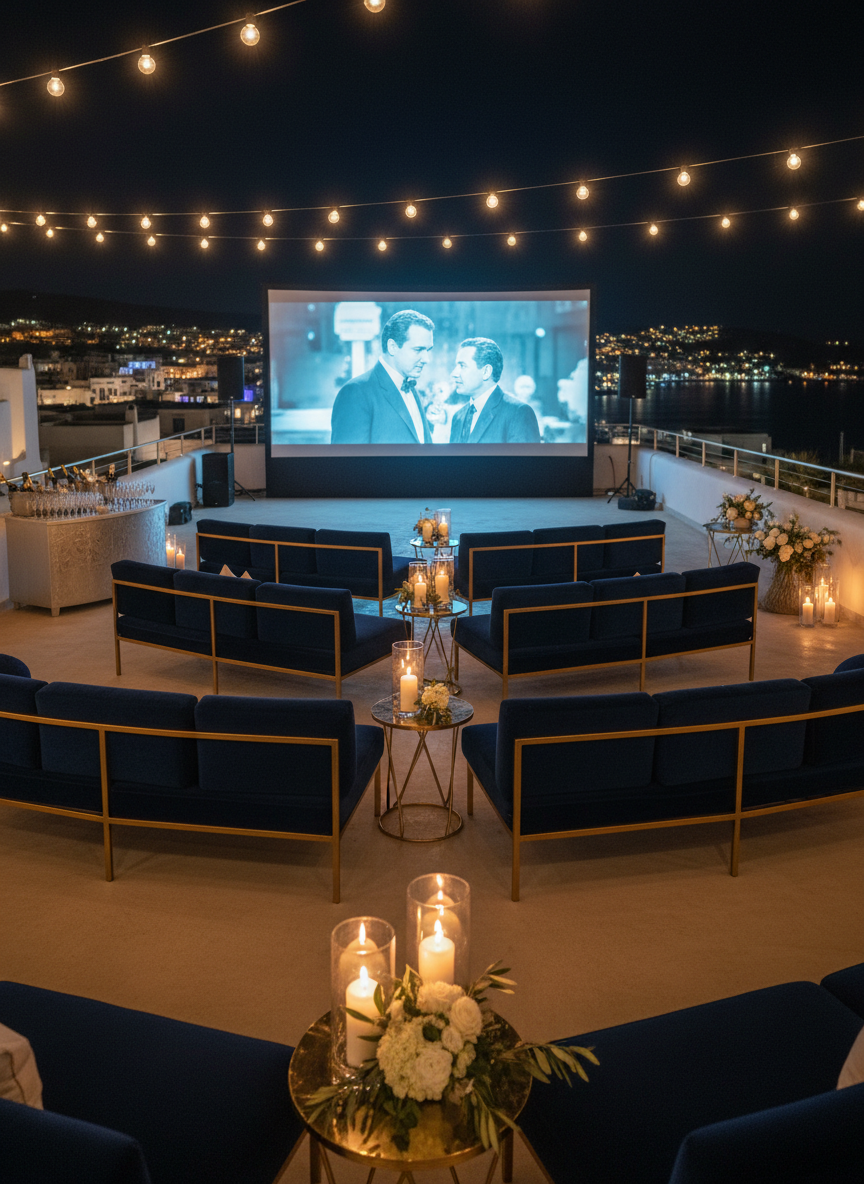
Outdoor cinema, slightly. I would rather tell you this than have you discover it. A bright moon lifts the ambient light and takes a little contrast off a projected image — blacks read closer to grey. Our screen is a 200-inch surface and the projector is a 3,500-lumen tri-laser, so it is perfectly watchable under a full moon and nobody has ever complained. But if you are choosing between two free nights in your stay and you want the picture at its absolute best, take the darker one.
So: full moon for the swim and the ruins. New moon for the stars and the film. If you can only have one evening and you want it to be ours, aim away from that table rather than at it.
If you are planning around a date
The autumn moons — 26 September and 26 October — land in the best weeks of the Cretan year. Warm sea, thin crowds, and evenings that are still long enough to eat outside. If you are building a trip around one, our eight anniversary evenings has more that costs nothing than it does that costs money.
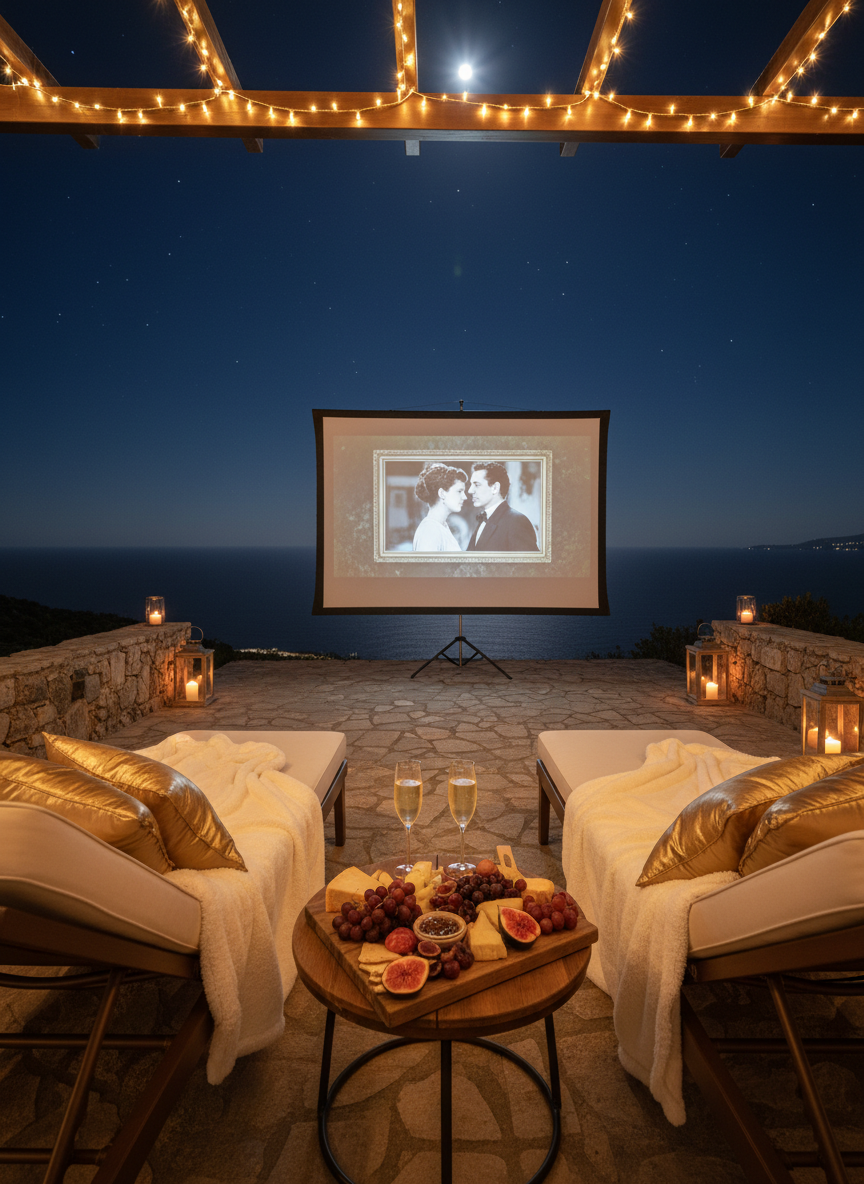
And if you do want a private open-air cinema on your terrace — Starlight for Two is €690, set up from around six and packed away by midnight, all of it running from one ordinary power socket with a 20-metre cable so the screen goes where the view is — tell us your dates and I will tell you honestly which night of your stay is the better one.
Written by Mark · Founder, Starlight Cinema Crete
Private cinema hire — from €450
Bring the cinema to your villa
A full outdoor cinema, set up at your villa across Crete for dusk and collected at midnight. Tell us your date and we will confirm within 24 hours.
Not ready yet?
Join the waitlist
Still deciding? Leave your email and we will keep you posted on available dates and early-season offers.
Check availability
Reserve your evening
Every evening includes the 200-inch screen, cinema sound, luxury seating, a popcorn bar and a discreet host — set up, styled and packed away without you lifting a finger. Tell us your date and we will reply within 24 hours.
Weather promise. If the night turns, we rebook your screening free — you never lose your evening.
Book without risk. Free cancellation up to 48 hours before your evening. No deposit taken until your date is confirmed.
One crew, few evenings. We host a limited number of screenings each week, so summer dates are allocated first come, first served.