Stargazing in Crete: Where to See the Milky Way (August Guide)
Crete's mountain skies are among the darkest in Greece — where to go, when to look up, and why the second week of August is the best free show of the summer.
There's a moment on a Cretan summer night — usually about twenty minutes after you've stopped looking at your phone — when the sky switches on. What looked like a scatter of stars becomes a ceiling of them, and across the middle, faint as breath on glass, runs the Milky Way. Most visitors never see it, because most visitors never leave the resort lights. Here's how to be the exception.
Why Crete is quietly brilliant for stargazing
The island's interior is mountainous, sparsely populated and high — which means dark skies within a 30–40 minute drive of almost any villa. Add warm, dry, dependably clear summer nights, and you have stargazing conditions people pay to fly to. The only enemy is light: the coastal strip glows, so the game is simply to put a hill between you and the towns.
The best dark-sky spots
The Amari Valley (south of Rethymno). Ringed by Psiloritis, Crete's highest mountain, and almost free of large towns. Pull over anywhere off the valley road and look up.
The Lasithi Plateau. A ring of mountains around a high plain of windmills and orchards — the drive up is beautiful at sunset, and the sky at the top is properly black.
The Omalos Plateau (above Chania). Best known as the gateway to the Samaria Gorge; at night, its altitude and isolation make it the west's finest sky.
The south coast. Villages like Loutro and the beaches beyond Paleochora face open sea to the south — no glow at all in the direction that matters most for the Milky Way.
Your own villa garden — if you're inland in Apokoronas or the hills behind Rethymno, simply turn off every outside light, give your eyes twenty minutes, and the sky comes to you.
When to look
Two rules decide everything. First, the moon: a bright moon washes out the stars, so check a moon-phase app and aim for the nights around the new moon — or the hours before moonrise. Second, the Perseids: every year in the second week of August, Earth passes through the debris trail of a comet and the sky produces dozens of shooting stars an hour at its peak. It is the best free spectacle of the Cretan summer, and it conveniently coincides with everyone's holiday.
How to watch (the unglamorous truths)
No telescope needed — the Milky Way and the Perseids are naked-eye shows. Bring a blanket to lie on, because craning your neck ruins it in minutes. Give your eyes twenty minutes away from phone screens (red-light mode if you must). And take the fleeces: even in August, the plateaus are surprisingly cool after midnight.
Making an evening of it
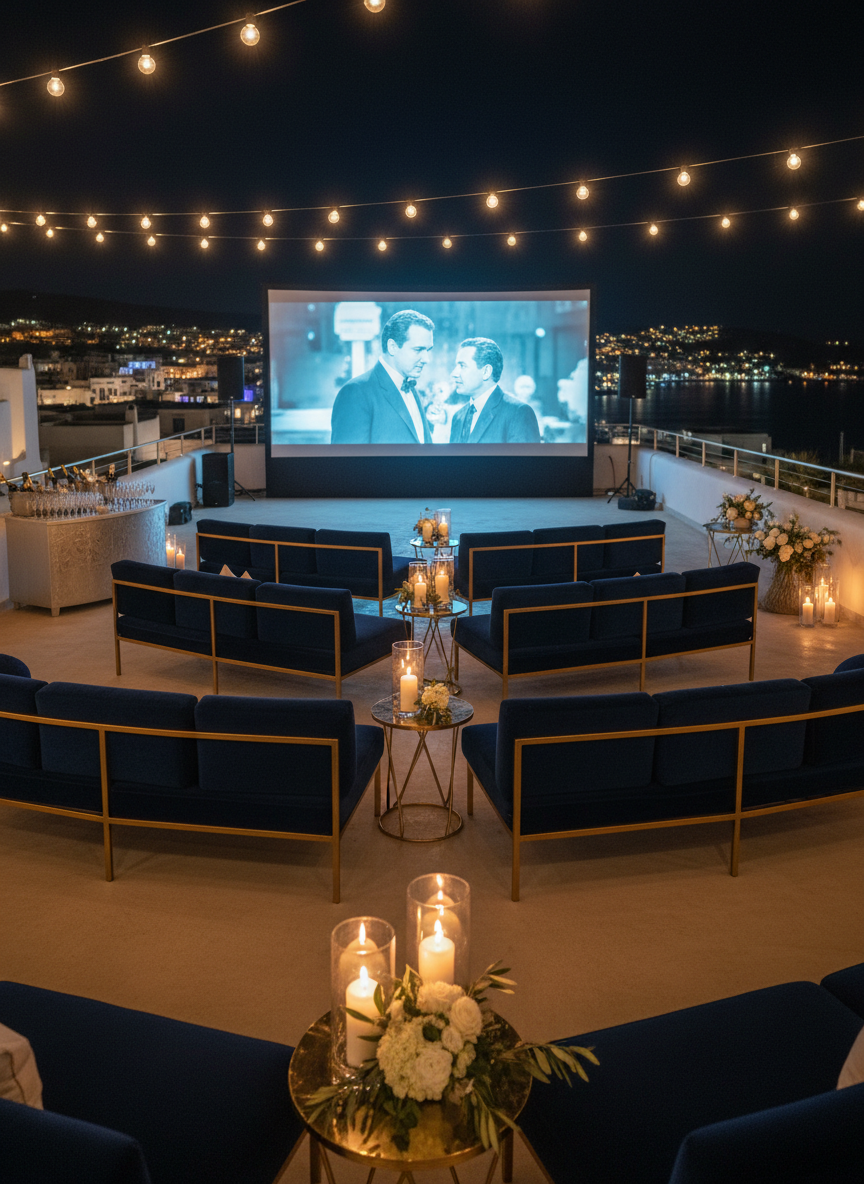
The stargazing hour pairs beautifully with everything else the Cretan night does well — a late village dinner on the way up, a night swim when you're back. Our own favourite combination, naturally, is the double feature: a film under the stars on your villa terrace, and when the credits end, everyone stays on the cushions, the screen goes dark, and the second show — the older one — is already playing overhead. More evening ideas in our guide to romantic things to do in Crete at night.
Want the cushions, blankets and big screen part handled? Check availability for your dates — we set up across Chania, Apokoronas, Rethymno, Heraklion, Gouves and Elounda.
Written by Mark · Founder, Starlight Cinema Crete
Not ready yet?
Join the waitlist
Still deciding? Leave your email and we will keep you posted on available dates and early-season offers.
Check availability
Reserve your evening
Every evening includes the 200-inch screen, cinema sound, luxury seating, a popcorn bar and a discreet host — set up, styled and packed away without you lifting a finger. Tell us your date and we will reply within 24 hours.
Weather promise. If the night turns, we rebook your screening free — you never lose your evening.
Book without risk. Free cancellation up to 48 hours before your evening. No deposit taken until your date is confirmed.
One crew, few evenings. We host a limited number of screenings each week, so summer dates are allocated first come, first served.